
Last Updated on March 25, 2026 by Denis Yankovsky
Running a small customer-facing business means juggling countless moving parts while meeting high customer expectations. Every appointment and meeting carries significant weight, yet managing bookings and schedules remains one of the biggest operational challenges small business owners face. Between customer inquiries, employee requests, vendor invoices, and daily calls, mistakes slip through easily. Manual scheduling often becomes the most time-consuming part of running a small business. Back-and-forth phone calls, emails, and text messages create chaos that leads to double-bookings, missed appointments, and frustrated customers.
The good news? Software companies keep innovating appointment scheduling solutions, creating powerful tools at increasingly accessible price points. Finding the right booking system for your business shouldn’t drain your time and budget. That’s why we’ve researched, tested, and compiled this comprehensive guide to the best appointment scheduling software for small business in 2026.
In this guide:
For small businesses, choosing the best appointment scheduling software for small business can streamline operations and enhance customer satisfaction.
- Understanding appointment scheduling software capabilities
- Key features to evaluate when choosing a solution
- Detailed reviews of 14 top scheduling tools
- Feature comparison to help you decide quickly
- Industry-specific recommendations
Table of Contents
What Appointment Scheduling Software Actually Does for Your Business
Appointment schedulers are online tools that either enable you to schedule appointments for your employees or allow customers to book services themselves through calendar views or contact forms. They’re accessible on both mobile devices and desktops, typically through browser-based dashboards or dedicated apps, so you and your team can manage bookings on the go.
The complexity varies significantly. Some solutions offer simple calendar functions for internal team scheduling, while others provide complete customer-facing booking systems integrated with payment processors, CRM platforms, and communication tools. Advanced options can charge and collect fees before appointments, serve as lead magnets on your website, and automate much of the scheduling workflow entirely.
Core Benefits of Using Appointment Scheduling Software
Modern scheduling tools deliver tangible improvements across your business operations. They prevent double-booking when you’re managing multiple calendars, eliminating the embarrassment and lost revenue of overcommitted schedules. The software cuts down unnecessary back-and-forth discussions about meeting times, which alone can save hours each week. By letting customers book online themselves, you free up valuable time previously spent coordinating schedules manually.
Built-in appointment reminders keep all parties updated automatically, reducing no-shows significantly. Perhaps most importantly, you gain access to an online booking system available anywhere, anytime, putting professional scheduling capabilities literally in your pocket. For businesses managing employee shifts, these tools also simplify scheduling employees across multiple locations or time zones.

How to Choose the Right Appointment Scheduler: Decision Framework
Before diving into specific tools, consider these critical questions that will guide your selection:
Budget and Scale Considerations: What’s your realistic monthly budget? Many tools offer free plans suitable for solo entrepreneurs or very small teams, while premium features typically start around $8-15 per user monthly. Consider not just current needs but anticipated growth over the next 12-18 months.
Team Size and Structure: How many team members need scheduling access? Some tools charge per calendar or user, while others offer unlimited team members even on lower-tier plans. For growing teams, scalability matters significantly.
Industry-Specific Requirements: Does your industry have specific compliance needs? Healthcare businesses require HIPAA-compliant solutions. Service businesses often need features like resource management, while consulting firms might prioritize video conferencing integrations.
https://bestsoftwaretests.com/best-calendar-app-for-mac/Integration Ecosystem: Which tools does your business already use? The best scheduler integrates seamlessly with your existing calendar apps, CRM, payment processor, and communication platforms. Creating a connected workflow prevents data silos and reduces manual data entry.
Customer Experience Priorities: Will customers book directly, or is this primarily for internal use? Customer-facing tools need intuitive interfaces, mobile responsiveness, and customization options to match your brand. Some industries benefit from features like instant confirmation, while others need approval workflows.
Payment Collection Needs: Do you need to collect deposits or full payments at booking time? Integration with payment processors like Stripe, PayPal, or Square can reduce administrative burden and no-shows simultaneously.
Mobile Requirements: Do you and your team need full functionality on mobile devices? While most modern schedulers offer mobile access, the quality of iOS and Android apps varies considerably.
Essential Features in Quality Scheduling Software
The best appointment booking systems share certain core capabilities that separate them from mediocre solutions.
Intuitive Usability: Whether you’re scheduling appointments yourself or enabling customer self-service, the interface should be straightforward. Drag-and-drop functionality, quick schedule modifications, and preset templates for weekly or monthly schedules save substantial time. The learning curve should be minimal for all users, including less tech-savvy team members and customers.
Multi-Device Accessibility: Your scheduling system must work seamlessly across desktop, Android, and iOS devices. Team members need to view schedules, request time off, and make changes from anywhere, making mobile functionality non-negotiable for modern businesses.
Self-Service Capabilities: For both employees and customers, self-service features reduce administrative burden dramatically. Employees should access their schedules, submit time-off requests, and communicate about shifts without constant manager intervention. Customer-facing booking pages should allow prospects to schedule appointments based on real-time availability without phone calls or emails.
Communication Integration: Team communication features matter. When scheduling questions arise, employees need quick ways to reach managers or coordinate with colleagues. Automated notifications, confirmation emails, and reminder messages keep everyone informed without manual effort.
Calendar Synchronization: The software must sync with major calendar platforms like Google Calendar, Outlook, and Apple Calendar. This prevents conflicts and ensures you never miss appointments due to outdated information.
Customization and Branding: Customer-facing booking pages should reflect your brand identity. Custom colors, logos, domain names, and personalized messaging create professional experiences that build trust and recognition.
The 14 Best Appointment Scheduling Solutions for Small Business in 2026
Considering all the above said, this is the shortlist we came up with after researching and testing a bunch of them.
1. Appointlet
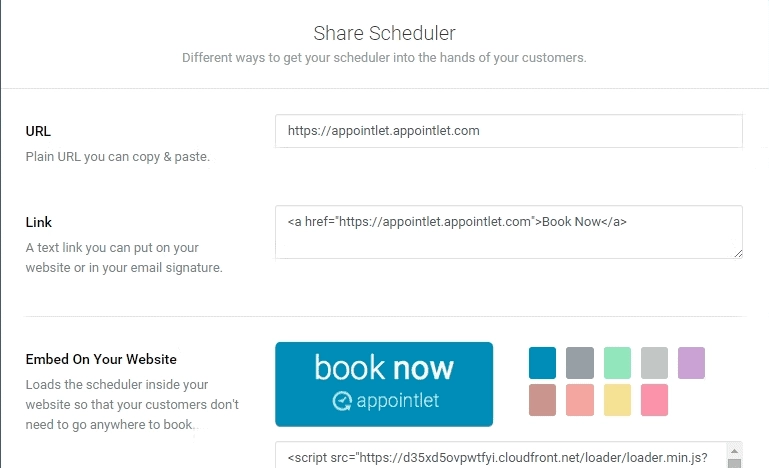
In a nutshell: Appointlet serves businesses of all sizes and various industries – from SAAS businesses to consulting companies to small service businesses.
Originally designed for sales teams, Appointlet has evolved into a versatile scheduling solution suitable for various industries, from SaaS businesses to consulting firms and service providers. Its strength lies in creating highly customizable booking pages that you can share with customers and prospects through multiple channels.
The standout capability is seamless integration into existing websites, landing pages, and email campaigns. It feels like a native part of your online presence rather than a third-party tool. The interface emphasizes simplicity without sacrificing functionality (something many competitors miss).
Appointlet connects with Google Calendar, Office 365, Zoom, Unbounce, Leadpages, Wishpond, and Zapier, among other platforms. This extensive integration ecosystem means it fits into most existing business workflows without requiring wholesale changes to your tech stack.
Best for: Sales teams, consultants, and service businesses needing flexible, embeddable booking options
Pricing: Free forever plan available for basic needs; paid plans start at $8 monthly per user with unlimited bookings
Key limitation: Advanced customization options require higher-tier plans
2. Bookafy

In a nutshell: Free appointment scheduler for service businesses with both POS and online use.
Bookafy differentiates itself through intelligent meeting assignment capabilities. When a customer or prospect requests an appointment, the system can automatically route them to the most appropriate team member based on expertise, availability, or department. This ensures customers reach the right expert, whether they’re seeking technical support or sales information.
The tool includes standard features like synchronized calendars, automatic time zone recognition, and customizable availability rules. Custom forms and templates can be branded with your company colors and logo, creating a cohesive customer experience.
Both point-of-sale and online booking capabilities make Bookafy particularly useful for businesses with physical locations that also want online scheduling options. The hybrid approach serves retail, healthcare, and personal services businesses especially well.
Best for: Multi-department businesses needing intelligent routing and both in-person and online booking
Pricing: Free plan available; Pro plan costs $9 monthly, Pro+ costs $13 monthly
Key limitation: The free plan has restrictions on team member count and integrations
3. Squarespace Scheduling (Ex Acuity Scheduling)

In a nutshell: Best appointment scheduling app for small businesses with websites built on Squarespace or those who want a complete online business front to be a single system.
Now integrated into the Squarespace ecosystem, this solution was already a leading appointment scheduler when operating independently as Acuity Scheduling. The acquisition enhanced rather than diminished its capabilities, particularly for businesses using Squarespace for their website.
The calendar customization options are extensive, with intuitive controls that make complex scheduling rules easy to implement. You can block out unavailable times, create buffer periods between appointments, schedule group workshops, and offer add-ons at checkout. Payment processing through Stripe, Square, or PayPal is built-in, with options to vault credit cards for future charges or accept tips during booking.
The tool syncs schedules according to each participant’s time zone automatically, eliminating a common source of confusion in remote or global businesses. Customizable intake forms gather necessary information before appointments, streamlining your workflow.
Available as iOS and Android apps alongside web access, Squarespace Scheduling maintains functionality across all platforms. The interface design emphasizes clarity and ease of use, making it accessible even for non-technical users.
Best for: Businesses with Squarespace websites or those seeking a complete online business presence within a single platform
Pricing: Plans start at $14 monthly for one calendar; no free version, but a free trial is available
Key limitation: Most cost-effective when used alongside other Squarespace services
Visit Squarespace (Acuity) Scheduling Website
4. Setmore
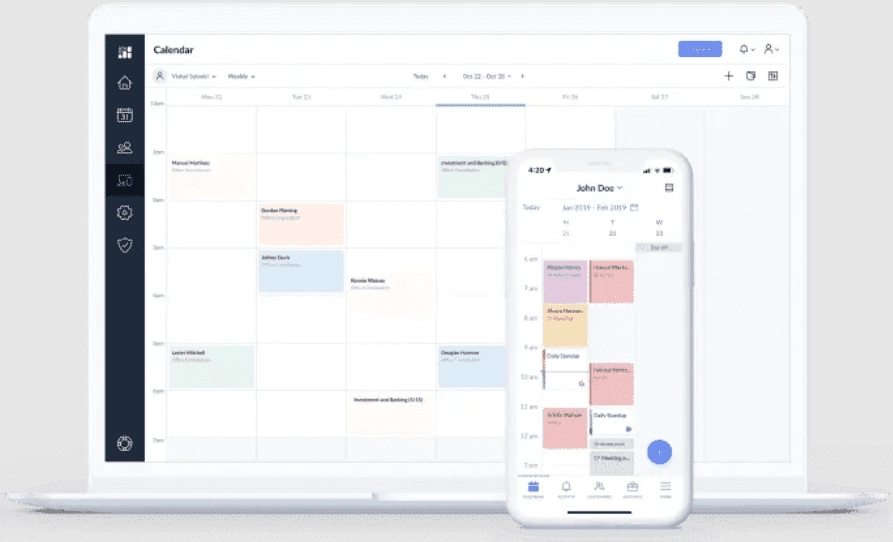
In a nutshell: A friendly self-service appointment scheduling tool that you can offer your customers on your business social network profiles.
Setmore’s defining feature is social media integration that lets customers book appointments directly from Facebook or Instagram, eliminating the need to visit a separate website. For businesses with strong social media presences, this dramatically reduces friction in the booking process.
The interface prioritizes simplicity, making it particularly attractive for non-technical users who might find other solutions overwhelming. Despite this simplicity, the tool doesn’t skimp on essential features like custom branded messages, calendar syncing, and reporting tools to track booking performance and patterns.
Desktop and mobile apps maintain consistent functionality across devices, ensuring you can manage appointments from anywhere. The reporting capabilities provide insights into peak booking times, popular services, and customer patterns that inform business decisions.
Best for: Businesses with an active social media presence seeking simple, customer-friendly booking
Pricing: Free plan supports up to four users; paid plans start at $5 monthly per user
Key limitation: Advanced features like payment processing require paid plans
5. 10to8

In a nutshell: A budget-friendly meeting booker for small businesses with a free-forever plan and all the necessary integrations.
Budget-conscious businesses will appreciate 10to8’s generous free-forever plan that includes core scheduling functionality without time limits or feature expiration. The automated booking reminders sent via multiple channels represent the tool’s standout feature, helping reduce no-shows through persistent but professional communication.
Integration capabilities span Google Calendar, Outlook, and other major calendar platforms, ensuring zero scheduling conflicts across your digital ecosystem. The tool also connects with Zoom, Weebly, Salesforce, and numerous other business platforms, creating a unified scheduling experience.
The reminder system uses SMS, email, and voice calls to ensure customers don’t forget appointments. This multi-channel approach proves particularly effective for industries prone to high no-show rates like healthcare, consulting, and personal services.
Best for: Budget-focused businesses needing robust free features with emphasis on reducing no-shows
Pricing: Free plan available indefinitely; paid options range from $9.60 to $40 monthly as businesses grow
Key limitation: Some advanced integrations and customization options require paid tiers
6. SimplyBook.me
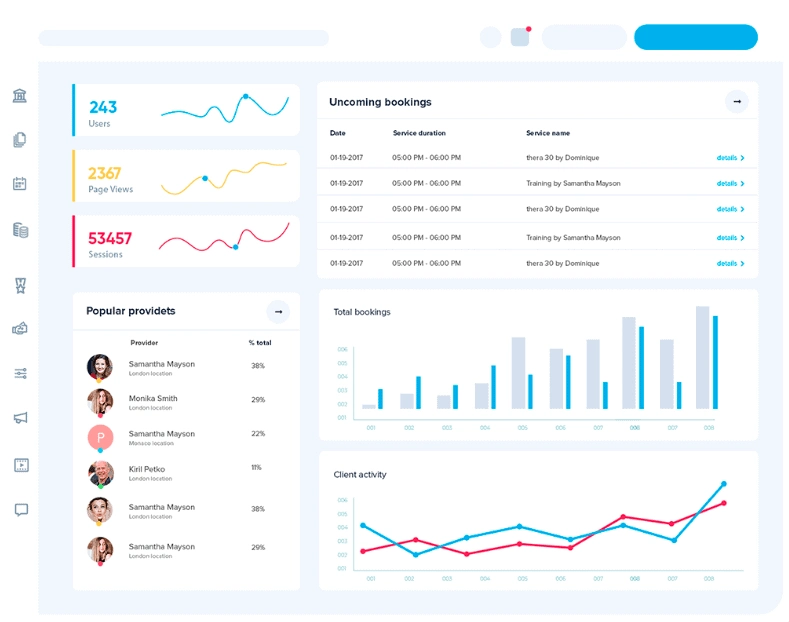
In a nutshell: The best appointment booking and reminder app for global businesses that supports many languages and integrates with several international payment systems.
Global businesses and multilingual customer bases make SimplyBook.me a natural choice thanks to support for 32 languages. This international focus extends to payment processing, with integrations for over 20 payment apps covering various countries and currencies.
Industry-specific templates come pre-loaded with relevant default fields, allowing businesses like gyms, salons, or consultancies to get started quickly without extensive customization. These templates reflect an understanding of different business models and their unique scheduling needs.
The reporting features provide comprehensive appointment statistics and SMS reminder logs, giving visibility into booking patterns and communication effectiveness. For businesses tracking performance metrics, this data proves invaluable for optimization.
Best for: International businesses or those serving multilingual customer bases needing global payment options
Pricing: Free plan available; premium plans range from $8.25 to $49.90 monthly, depending on features needed
Key limitation: The interface can feel complex for businesses needing only basic scheduling
7. Calendly
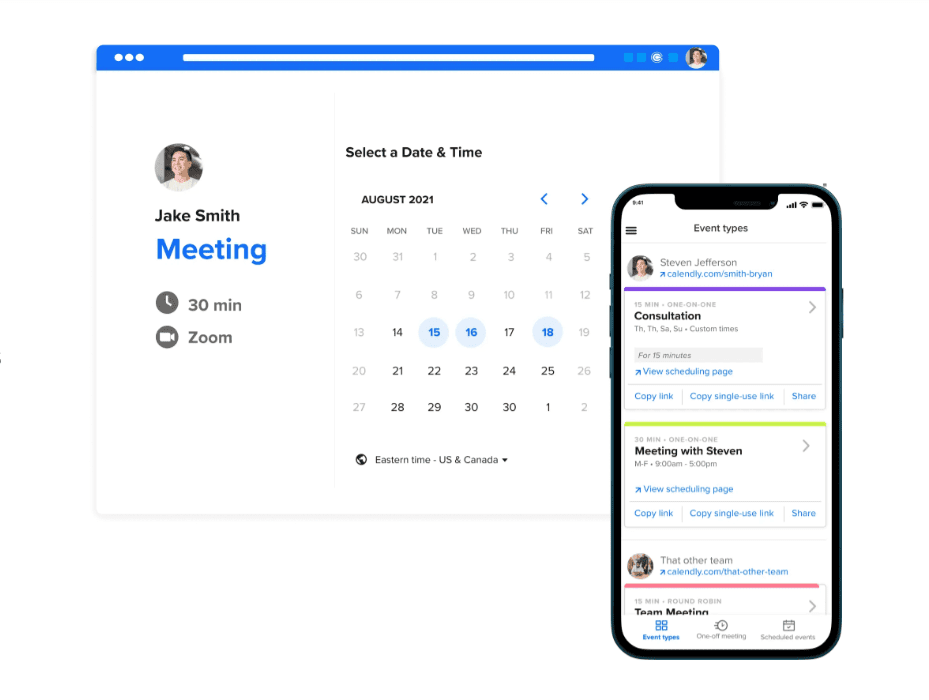
In a nutshell: Calendly is a very friendly free online meeting scheduling app that allows you to collaborate with multiple team members.
Calendly has become nearly synonymous with modern appointment scheduling, particularly for professional services and sales teams. The tool’s popularity stems from its elegant simplicity: you set availability rules, share your Calendly link, and invitees select times that work for them. This eliminates email tennis entirely.
The buffer feature automatically creates adjustable spacing around meetings, preventing exhausting back-to-back schedules while ensuring you don’t overcommit. Businesses can configure buffers by appointment type, giving flexibility for different meeting lengths and intensity levels.
Meeting type options include round-robin distribution (rotating among team members), collective availability (finding times when multiple team members are free), and standard one-on-one appointments. This versatility serves various business scenarios from sales prospecting to team collaboration.
Integration with multiple calendar platforms ensures Calendly reflects your true availability across all scheduling systems. The sync works bidirectionally, so appointments booked through Calendly appear in your native calendar automatically.
Best for: Professional services, consultants, and sales teams prioritizing elegant simplicity and link-based booking
Pricing: Free version with basic features and a single calendar; paid plans range from $8 to $16 monthly per user
Key limitation: Advanced team features and integrations require paid plans
8. Calendar

In a nutshell: The best simple scheduling management software for small businesses to integrate all of your different calendars into one.
Calendar.com addresses a common pain point: managing appointments across multiple calendar systems. If you’re juggling Google Calendar, Apple’s iCal, and Outlook simultaneously, Calendar.com creates a unified view while maintaining synchronization across all platforms.
The AI functionality monitors your scheduling patterns and automates routine tasks without requiring manual intervention. Over time, the system learns preferences and makes intelligent suggestions that save time and reduce cognitive load.
Analytics provide visibility into how you actually spend time versus how you think you spend it. These insights can reveal patterns like excessive meeting time, fragmented focus periods, or scheduling inefficiencies that drain productivity.
Reminders and notifications keep all parties updated automatically, with customizable timing and communication channels. The paid version includes meeting transcription, which proves valuable for capturing action items and key decisions without dedicated note-taking.
Best for: Professionals managing multiple calendar systems needing unified visibility and AI-powered optimization
Pricing: Limited free version available; paid plans range from $6 to $8 monthly
Key limitation: AI features and transcription require paid subscriptions
9. Doodle
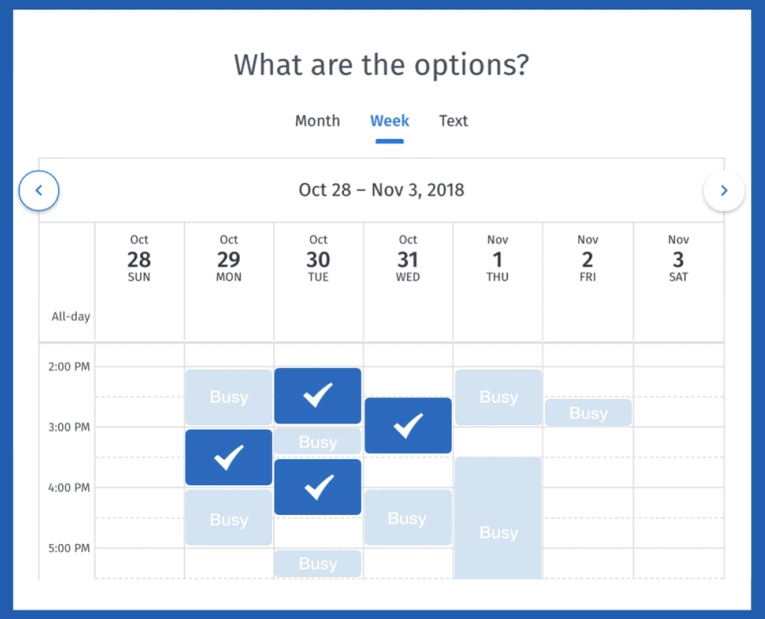
In a nutshell: The best meeting scheduler app for connecting multiple people across multiple time zones.
Doodle takes a different approach than most schedulers, specializing in group coordination rather than one-on-one appointments. When you need to find time that works for three or more people across different time zones, Doodle’s poll-based system shines.
Participants mark their availability on a shared grid, making it immediately clear which times work for everyone. This transparency eliminates the endless email chains typical of group scheduling, reducing what might take days down to minutes.
The time zone handling is particularly sophisticated, automatically adjusting displayed times for each participant’s location. This prevents the confusion that often derails international or distributed team scheduling.
Best for: Teams coordinating group meetings across multiple time zones or organizations scheduling events with external participants
Pricing: Free trial available; plans range from $6.95 to $8.95 monthly per user
Key limitation: Less suited for standard customer appointment booking than specialized group coordination
10. ScheduleOnce
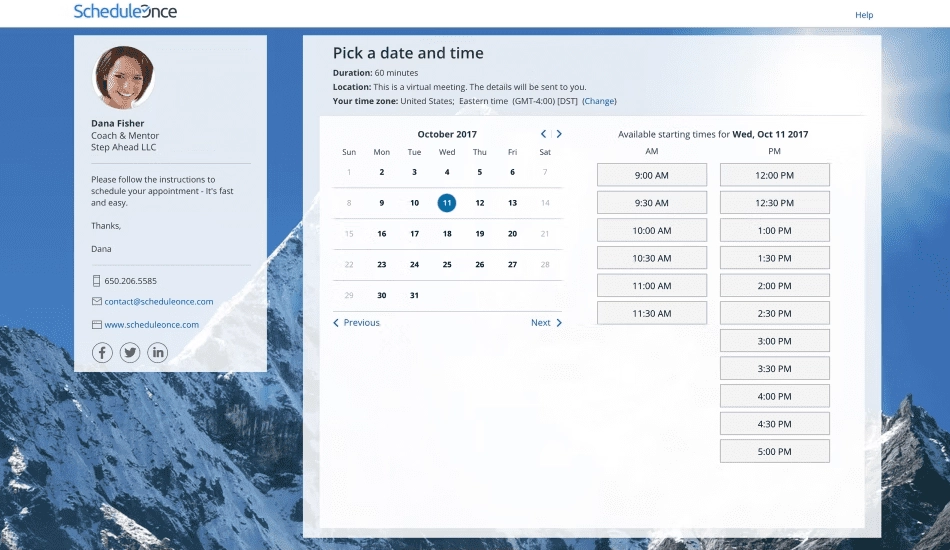
In a nutshell: The best team meetings scheduler with calls and video-conferencing built-in, so you don’t need to use Zoom or other 3d party channels.
Built-in video conferencing sets ScheduleOnce apart, eliminating the need for separate Zoom or Google Meet accounts. This integration streamlines the entire meeting process from scheduling through execution, with video links generated automatically when appointments are booked.
The tool handles group meetings, one-on-one calls, and video conferences equally well, making it suitable for businesses hosting webinars, customer demonstrations, or team collaboration sessions. The seamless transition from scheduling to meeting reduces technical friction for participants.
Synchronization across your website, email systems, and payment processors ensures consistency throughout the customer journey. The branding customization options are extensive, allowing businesses to maintain a professional appearance across all customer touchpoints.
Best for: Teams conducting frequent video meetings who want scheduling and conferencing in one platform
Pricing: Free plan allows 25 users to collaborate; unlimited premium plans start at $10 monthly per user
Key limitation: Video conferencing may not match specialized platforms’ feature depth
11. YouCanBook.me
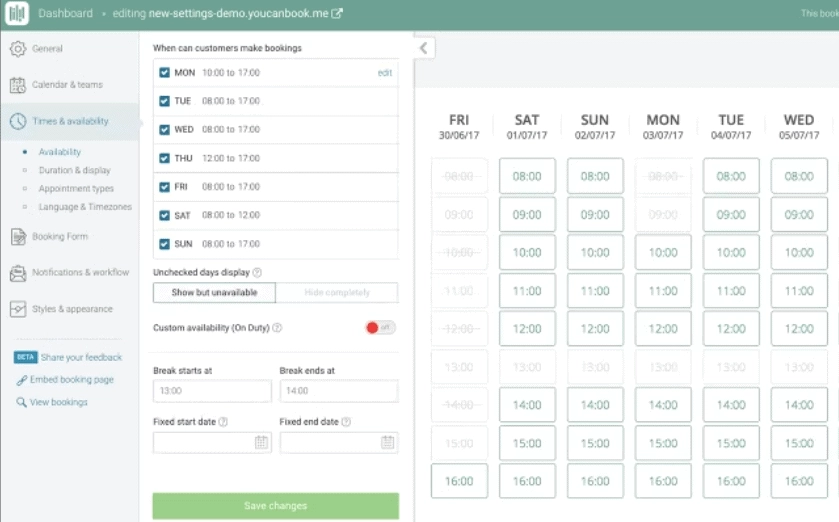
In a nutshell: The best online meeting booker that you can put on your business social media or website.
YouCanBook.me creates shareable booking grids that embed naturally into websites, social media profiles, and email signatures. This versatility means customers can book appointments wherever they encounter your business online, reducing barriers to scheduling.
The customization options for booking pages and confirmation emails allow businesses to craft experiences that reinforce brand identity. Custom fields gather necessary information during booking, reducing the need for follow-up communication before appointments.
Integration with Google and Apple calendars ensures bidirectional synchronization, while connections to Zapier, Zoom, and other platforms create comprehensive workflow automation. The reminder system reduces no-shows through customized notifications that match your communication style.
Best for: Businesses wanting highly embeddable booking options across multiple online channels
Pricing: Free forever plan available; unlimited paid plan costs $10 monthly per calendar
Key limitation: Advanced automation features require an understanding of integration platforms like Zapier
12. HubSpot Meetings
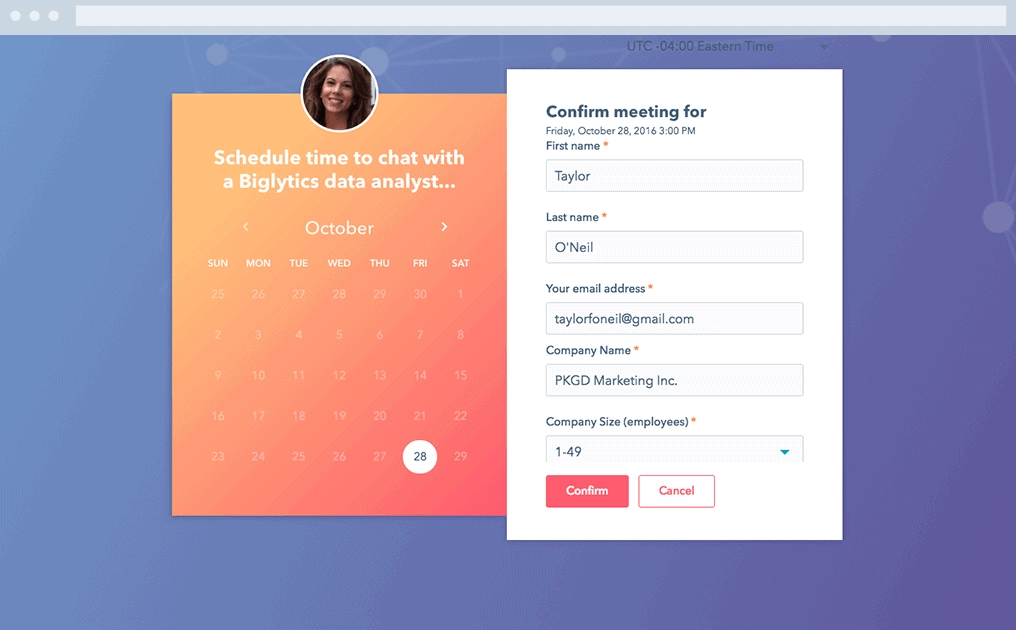
In a nutshell: The best meeting solution built into the mighty all-around business Marketing & CRM platform.
Part of HubSpot’s comprehensive business platform, the Meetings tool integrates deeply with its CRM, marketing automation, and sales tools. This integration means appointment data flows seamlessly into customer records, email campaigns, and sales pipelines without manual data entry.
For businesses already using HubSpot, adding the Meetings tool creates a unified ecosystem where scheduling, customer communications, and sales activities connect automatically. The appointment data enriches customer profiles and enables more sophisticated automation.
While HubSpot serves enterprises, their modular approach allows small businesses to start with just the tools they need and expand over time. The scheduling functionality works standalone but gains power when combined with other HubSpot services.
Best for: Businesses using or planning to adopt HubSpot’s marketing and sales platform, seeking integrated scheduling
Pricing: Basic scheduling comes free for HubSpot users; part of Sales Hub starting at $45 monthly
Key limitation: Most valuable when used within broader HubSpot ecosystem; may be overkill for simple scheduling needs
Check HubSpot and other hot Black Friday productivity and task management software deals before it’s too late!
13. Dubsado

In a nutshell: The best software to manage your appointments and other business operations aspects with a single suite of business online tools.
Dubsado positions itself as a complete business management platform with scheduling as one component alongside invoicing, project management, and reporting. This holistic approach appeals to businesses wanting to consolidate multiple tools into one system.
The ability to collect booking fees at appointment scheduling helps ensure commitment while reducing no-shows. Custom forms and photo attachments in confirmations let businesses provide relevant information immediately after booking.
Meeting padding features prevent overscheduling by automatically adding buffer time between appointments. Minimum notice settings help avoid last-minute bookings that disrupt schedules or leave insufficient preparation time.
Integrations with major business tools ensure Dubsado fits into existing workflows, while the design emphasizes clarity with intuitive menus and clean typography. The visual presentation makes the tool more approachable than some competitors.
Best for: Service businesses wanting an all-in-one platform for client management, scheduling, and invoicing
Pricing: Free trial available; $35 monthly or $350 annually for full suite access
Key limitation: Learning curve for businesses only needing scheduling functionality
14. Square appointments

In a nutshell: The best appointment scheduling solution for businesses that already use the Square payment services suite of tools or their POS system.
Businesses already using Square for payment processing will find Square Appointments a natural extension, creating seamless integration between scheduling and transactions. The built-in point-of-sale functionality serves businesses with physical locations particularly well.
Real-time payment tracking provides visibility into revenue as appointments are booked and completed. The ability to set fees for cancellations and late arrivals helps manage no-shows and teaches customers to respect scheduled times.
Google Calendar integration ensures appointment visibility across platforms, while automated text messages and email reminders reduce no-shows without manual effort. The reminders are customizable to match your business’s communication style and customer preferences.
Best for: Businesses using Square payment processing or point-of-sale systems seeking integrated scheduling
Pricing: Free plan with single calendar available; payment processing fees of 2.6% + 10¢ apply across all plans. Paid plans range from $29 to $69 monthly
Key limitation: Transaction fees apply even on paid plans; most beneficial within the Square ecosystem
Visit Square Appointments Website
Appointment Booking App Feature Comparison Table
To help you quickly identify which tools best match your needs, this comparison highlights key capabilities across all 14 solutions:
| Tool | Starting Price | Free Plan | Team Features | Payment Processing | Best For |
|---|---|---|---|---|---|
| Appointlet | $8/month | Yes | Round-robin, teams | Via integrations | Sales teams, consultants |
| Bookafy | $9/month | Yes | Smart routing | Via integrations | Multi-department businesses |
| Squarespace Scheduling | $14/month | No | Multiple calendars | Stripe, Square, PayPal | Squarespace users, professional services |
| Setmore | $5/month | Yes (4 users) | Team scheduling | Via integrations | Social media-focused businesses |
| 10to8 | $9.60/month | Yes | Team management | Via integrations | Budget-conscious businesses |
| SimplyBook.me | $8.25/month | Yes | Staff management | 20+ processors | International businesses |
| Calendly | $8/month | Yes (limited) | Round-robin, collective | Via integrations | Professional services, sales |
| Calendar | $6/month | Yes (limited) | Multi-calendar sync | Via integrations | Multi-calendar users |
| Doodle | $6.95/month | Trial only | Group polling | No | Group coordination |
| ScheduleOnce | $10/month | Yes (25 users) | Team video meetings | Via integrations | Video-heavy businesses |
| YouCanBook.me | $10/month | Yes | Team booking | Via integrations | Embeddable booking needs |
| HubSpot Meetings | $45/month | Yes (basic) | CRM integration | HubSpot payments | HubSpot ecosystem users |
| Dubsado | $35/month | Trial only | Client management | Via integrations | All-in-one business management |
| Square Appointments | $29/month | Yes (1 calendar) | Location management | Square (2.6% + 10¢) | Square POS users |
Industry-Specific Recommendations
Different industries have unique scheduling requirements that certain tools address better than others.
Healthcare and Wellness: Healthcare businesses need HIPAA compliance, insurance integration, and patient communication features. Squarespace Scheduling and 10to8 both offer healthcare-specific features, including secure patient data handling and integration with electronic health records.
Beauty and Personal Services: Salons, spas, and fitness studios benefit from tools with strong mobile apps, recurring appointment support, and visual calendars. Setmore and SimplyBook.me excel here with industry-specific templates, online payment collection, and social media booking capabilities.
Professional Consulting: Consultants need video conferencing integration, sophisticated calendar syncing, and professional branding options. Calendly, ScheduleOnce, and Appointlet serve this market particularly well with clean interfaces and extensive integration options.
Sales and Business Development: Sales teams prioritize link-sharing simplicity, CRM integration, and automated follow-ups. Calendly and HubSpot Meetings lead this category, especially when combined with broader sales automation tools.
Multi-Location Businesses: Franchises and businesses with multiple locations need centralized management with location-specific scheduling. Square Appointments and SimplyBook.me offer robust location management alongside payment processing.
Implementation Considerations
Choosing the right tool represents only the first step. Successful implementation requires attention to several factors beyond features and pricing.
Migration from Existing Systems: If you’re replacing an existing scheduling solution, data migration matters. Most tools offer import capabilities, but the ease varies significantly. Consider whether you need to maintain historical appointment records and how much manual work the transition will require.
Team Training and Adoption: Even the most intuitive tools require some learning curve. Plan for training time, create documentation for common tasks, and designate a point person for troubleshooting during the transition period. Resistance to new systems often stems from inadequate training rather than actual usability issues.
Customer Communication: If you’re introducing customer-facing booking for the first time, communicate the change clearly and positively. Highlight benefits like 24/7 booking availability and instant confirmation rather than focusing on operational convenience for your business.
Integration Testing: Before fully committing, test integrations with your existing tools thoroughly. Verify that calendar sync works bidirectionally, payment processing handles your transaction types correctly, and automated notifications deliver reliably.
Gradual Rollout: Consider implementing the new system gradually, perhaps starting with one team or service type before expanding company-wide. This approach lets you identify and resolve issues with limited impact.
Making Your Final Decision
The best appointment scheduling software for your business depends on your specific context, but several principles guide smart decisions. Start with your actual requirements rather than impressive feature lists. Many businesses pay for advanced capabilities they never use while missing essential features that would genuinely improve operations.
Think about the total cost of ownership, including not just subscription fees but also transaction costs, implementation time, and ongoing maintenance. A slightly more expensive tool that reduces administrative burden by several hours weekly quickly pays for itself.
Consider scalability and future needs. While you shouldn’t pay for capabilities you’ll never need, choosing a platform that can grow with you prevents disruptive migrations later. Most tools offer upgrade paths, but switching vendors entirely creates significant friction.
Take advantage of free trials and free plans to test functionality with real appointments before committing. Theoretical feature comparisons only reveal so much (hands-on experience quickly highlights whether a tool fits your workflow).
Remember that scheduling software should make your life easier, not more complicated. If a tool feels overly complex or creates more work than manual scheduling, keep searching. The right solution feels almost invisible once implemented, quietly handling appointment logistics while you focus on serving customers and growing your business.
The tools listed here represent the strongest options available in 2026, each excelling in specific scenarios. By matching your business needs with each tool’s strengths, you’ll find a scheduling solution that streamlines operations, reduces no-shows, improves customer satisfaction, and ultimately contributes to your business growth.
Using good scheduling software can transform your business operations, and optimizing your digital presence further amplifies results. If you’re interested in enhancing your online visibility, effective rank tracking helps measure and improve your website’s performance.
Did you find it valuable? Please rate to support our work!
Discover more from Best Software & Apps — Tested & Reviewed
Subscribe to get the latest posts sent to your email.