Last Updated on May 11, 2026 by Denis Yankovsky
Your company just hired twenty new employees. By month three, you’ve lost four of them. The onboarding was rushed. The training felt generic. Nobody felt prepared for their actual job on day one. This is a common problem for many businesses, costing them millions.
The issue isn’t your team’s effort. It’s that old training methods don’t work well. You can’t have your best sales manager coach every new hire. You can’t send everyone to expensive workshops. You need a smarter way to train.
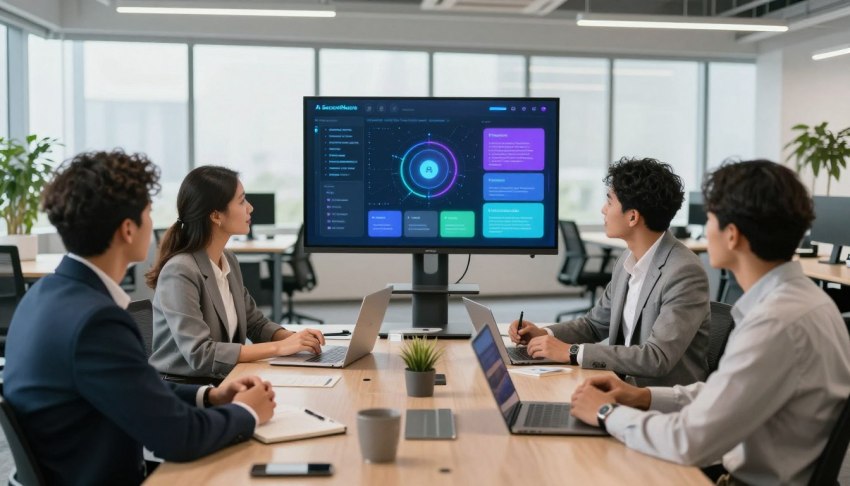
That’s where SecondNature.ai comes in. This AI technology lets your team practice real conversations with an AI Avatar. They get instant feedback on their performance, tone, and technique. It’s real practice that mirrors actual job situations.
Big names like SAP, the NY Mets, University of Houston, and A-Max Auto Insurance use SecondNature ai. They’re not small startups. They’re leaders using AI to solve training challenges. The platform helps with onboarding, developing skills, and managing change.
The numbers show SecondNature ai’s success. It just got a $22M Series B funding round in November 2025. This is proven technology that works.
You don’t need to be a tech expert to use SecondNature ai. You just need to see that your training challenges are real. This article shows how AI technology can help solve them.
Table of Contents
Key Takeaways
- SecondNature ai uses AI technology to create personalized practice environments for workplace conversations and professional skills development
- The platform delivers real results for major organizations including SAP, the NY Mets, and University of Houston across onboarding, professional development, and change management
- SecondNature ai provides instant, data-driven feedback on performance, tone, and technique to help employees improve faster
- The AI technology scales training programs without requiring expensive one-on-one coaching or external training programs
- SecondNature ai reduces the time and cost associated with employee onboarding and skill development
- The platform works across multiple languages, making it ideal for global teams and distributed workforces
- AI technology from SecondNature ai bridges gaps that human-only training cannot address efficiently or affordably
Understanding AI as a Tool, Not a Threat to Your Business
Many business leaders feel uneasy about artificial intelligence. This unease often stems from not fully understanding what AI does. Our brains naturally see technology as human-like, which can make us trust it more than we should.
This psychological trick can lead to poor decisions about using AI in your business.
The Psychology Behind AI Interaction
Studies on virtual reality show an interesting fact. People flinch and feel pain when a mallet appears to hit their hand on a VR screen. This happens even though nothing physical touches them. Their brains fill in the gaps between what they see and what they feel.
AI conversations work the same way. When you talk to AI, your brain thinks it’s human. You might call AI “lying” or “secretive,” even though it’s just following its programming. AI systems don’t have hidden agendas like humans do. They just process information based on their design.
- AI processes patterns, not thoughts
- Neural networks generate probability-based responses
- Your brain assigns meaning to the output
- No consciousness or intention exists in the system
Why Emotional Reactions Lead to Poor Business Decisions
Misunderstanding AI can lead to two big problems. You might trust AI too much, ignoring your own judgment. Or, you might distrust AI too much, missing out on its benefits.
Neither approach is good for your business. AI is a tool, like the wheel or engine, that helps your team do more. It enhances human abilities.
Think of AI like this: your brain recognizes patterns, and AI does the same but faster and better. Your experience adds context, while AI provides processing power. Together, they lead to better results than either could alone.
- Recognize your emotional response to realistic AI interaction
- Separate the feeling from the functionality
- Evaluate artificial intelligence based on actual capabilities
- Use AI to strengthen human decision-making, not replace it
Seeing AI as a tool to enhance human abilities, not as a threat or oracle, is key. This mindset helps you use AI wisely. It’s important when considering tools like SecondNature ai for training and development.
How SecondNature ai Transforms Workplace Training
Traditional training methods can be a big problem for growing businesses. New hires need coaching that fits them. Sales teams and customer service reps face tough conversations. But hiring enough trainers is expensive and not very efficient.
SecondNature ai fixes this by bringing smart, flexible training to your team. It uses machine learning and natural language processing. This creates real-life conversation practice environments.
Your employees practice with AI avatars that act naturally. Unlike scripts, these conversations feel real because the AI adapts to what you say. Sales reps can practice handling objections many times. Customer service teams can safely practice de-escalation techniques.
What makes SecondNature ai stand out is the instant feedback. Machine learning analyzes not just words but also tone and confidence. Trainees get detailed coaching that would cost thousands with human trainers.
Organizations across many industries trust this approach:
- SAP streamlined sales training globally
- University of Houston accelerated employee onboarding
- Oracle Netsuite scaled sales training successfully
- A-Max Auto Insurance scaled compliance training
- NY Mets enhanced customer experience interactions
These companies saw faster onboarding, better skills, and consistent quality. Your organization can too with intelligent, scalable training solutions.
The End of the Traditional Software Development Model
For 25 years, making custom software was very expensive and took a long time. A custom backend system could cost $300,000 to $1 million. It took 12 to 18 months or more to finish. This old way used a pyramid structure, with a few top architects leading many developers.
This led to technical debt, poor quality, and missed deadlines. But, things are changing fast.
AI-assisted development is making things cheaper and faster. Now, small teams can finish projects in weeks that used to take years. This change makes custom solutions much more affordable.
From Million-Dollar Projects to Affordable Solutions
Before, only big companies could afford custom software. Mid-market companies had to choose between expensive custom tools or off-the-shelf software that didn’t fit well.
Now, deep learning lets developers work faster and better. Projects that took months now take weeks. AI tools help improve quality by catching errors early and keeping coding standards consistent.
- Development costs reduced by 70-90%
- Project timelines compressed from 12-18 months to 4-8 weeks
- Smaller teams deliver enterprise-grade results
- Technical debt decreases with AI code review
AI-Assisted Development Changes the Build vs. Buy Equation
The old “build versus buy” decision thought custom development was too pricey for most. This view shaped the whole software industry. SaaS platforms were the only affordable choice.
AI-assisted development changes this. Now, mid-market companies can afford custom solutions. This makes the competition fiercer. Companies like SecondNature ai must offer more than just low prices.
This change gives your business more power. You can choose to build, buy, or mix solutions. You’re making informed decisions, not just because you have to. The barriers to innovation are falling, and specialized platforms offer unique benefits.
Global Training Made Simple with Multi-Language Support
Running a business in many countries is tough. You find a training platform that works well in English but only for part of your team. Your international staff might feel left out or you could spend a lot on translations that don’t keep the original meaning. SecondNature ai fixes this by supporting 22 languages and more.
The platform uses advanced neural networks for realistic roleplay simulations in different languages. It’s not just about translating words. Neural networks grasp the context, idioms, and conversational details of each language. Your sales team in São Paulo gets the same quality training as your team in Tokyo. The AI avatars have natural business conversations in Portuguese, Mandarin Chinese, Arabic, and other languages, just like in English.
- Portuguese and Spanish
- French (Canada and France)
- German, Dutch, and Italian
- Japanese, Korean, and Mandarin Chinese
- Arabic (UAE), Hindi, and Turkish
- Polish, Swedish, Norwegian, and Danish
- Finnish, Hungarian, Czech, and Malay
Your global team stays consistent. You can use the same training methods everywhere without needing different trainers. New languages are added as the platform grows. Sales teams learn the same way everywhere. Customer service quality stays high everywhere. Everyone gets the same professional development, no matter their native language.
From Data Innovation to True Invention with Artificial Intelligence
The last 25 years have changed how businesses use information. Companies like Google, Amazon, and Kroger have built huge datasets. These datasets power targeted ads, personalized recommendations, and smarter supply chains. This is real innovation.
But, there’s a big gap. Human teams can only analyze so much data before it gets lost in the noise. They miss important connections and insights.
Artificial intelligence changes this. AI finds connections in complex data that humans can’t. This leads to new ideas that were previously unseen.
Closing the Gaps Human Teams Cannot Bridge
Data analytics has grown a lot. Your business creates information all the time. The real challenge is understanding it all.
A human might spend weeks on one dataset. But AI can look at thousands at once. It finds patterns humans wouldn’t see.
AI is making real breakthroughs in many areas:
- Healthcare is moving toward personalized care based on genetics and history
- Urban planners are improving traffic and energy use with big data
- Agriculture is getting more efficient and green with AI
- Education is tailoring learning to each student’s needs
These changes are happening now. AI is key because it can process information faster than humans. It tests ideas on a huge scale and finds what’s important.
Your business has the same chance. Using AI for data analytics is not just automating work. It opens up new insights that give you an edge. This is what happens when you close the gaps your team can’t bridge alone.
Conclusion
The story about artificial intelligence is often too extreme. It’s not about robots taking all jobs or solving every problem. AI is actually changing the kind of work we do. It’s moving us from doing repetitive tasks to using our creativity and strategic thinking.
As a business leader or entrepreneur, you have a big choice to make. You can use AI tools like SecondNature ai to unlock new possibilities. Or, you can stick with old ways and let others get ahead. This choice will affect your business’s success now and in the future.
SecondNature ai is a great example of how AI can help. It solves big problems in training, like making onboarding faster and more consistent. It uses advanced technology to make training better for everyone, no matter where they are in the world.
The barriers to innovation are falling, and powerful tools are within reach. AI is already changing industries, but it’s up to you to use these changes to your advantage. Look at your training methods and ask if they’re working for you. Are they fast, consistent, and scalable? Solutions like SecondNature ai can help solve these problems. The choice is yours to make a difference in your business.
FAQ
What exactly is SecondNature ai and how does it differ from traditional training software?
How does artificial intelligence actually work in training scenarios, and should I worry about it replacing human trainers?
What specific business problems does SecondNature ai solve, and how does it impact our bottom line?
How much does SecondNature ai cost compared to building a custom training system or developing one internally?
What exactly is SecondNature ai and how does it differ from traditional training software?
How does artificial intelligence actually work in training scenarios, and should I worry about it replacing human trainers?
What specific business problems does SecondNature ai solve, and how does it impact our bottom line?
How much does SecondNature ai cost compared to building a custom training system or developing one internally?
FAQ
What exactly is SecondNature ai and how does it differ from traditional training software?
SecondNature ai is an AI-powered training platform. It uses advanced machine learning and natural language processing. This creates realistic roleplay simulations for workplace training.
Unlike traditional training software, SecondNature ai offers dynamic conversations with AI avatars. These avatars respond naturally to trainee inputs. Your sales team can practice objection-handling dozens of times.
Customer service representatives can rehearse de-escalation techniques. New hires can build confidence through repetition—all without needing a trainer for each interaction. The platform has proven effective with organizations like SAP and the NY Mets.
How does artificial intelligence actually work in training scenarios, and should I worry about it replacing human trainers?
AI in SecondNature ai is a tool that enhances human capability, not replace it. The neural networks analyze trainee responses, including tone and word choice. They provide instant, personalized feedback.
Think of AI as a tool that extends human capability, like the wheel or microchip. Human trainers become more effective, focusing on coaching and problem-solving. AI handles repetitive practice and detailed feedback.
Understanding AI as a sophisticated pattern-matching system is key. This leads to better implementation decisions.
What specific business problems does SecondNature ai solve, and how does it impact our bottom line?
SecondNature ai addresses three critical business challenges: training scalability, consistency, and effectiveness. It enables unlimited parallel training sessions, so your entire team can practice at once.
Consistency is possible across locations and time zones. Trainees receive the same quality coaching methodology. Effectiveness improves with immediate, specific feedback on communication patterns.
These improvements directly impact revenue through faster ramp-up times and reduced quality inconsistencies. Improved conversion rates also result from mastering difficult conversations.
How much does SecondNature ai cost compared to building a custom training system or developing one internally?
The economics of software have shifted dramatically. Custom training solutions used to require 0,000 to
FAQ
What exactly is SecondNature ai and how does it differ from traditional training software?
SecondNature ai is an AI-powered training platform. It uses advanced machine learning and natural language processing. This creates realistic roleplay simulations for workplace training.
Unlike traditional training software, SecondNature ai offers dynamic conversations with AI avatars. These avatars respond naturally to trainee inputs. Your sales team can practice objection-handling dozens of times.
Customer service representatives can rehearse de-escalation techniques. New hires can build confidence through repetition—all without needing a trainer for each interaction. The platform has proven effective with organizations like SAP and the NY Mets.
How does artificial intelligence actually work in training scenarios, and should I worry about it replacing human trainers?
AI in SecondNature ai is a tool that enhances human capability, not replace it. The neural networks analyze trainee responses, including tone and word choice. They provide instant, personalized feedback.
Think of AI as a tool that extends human capability, like the wheel or microchip. Human trainers become more effective, focusing on coaching and problem-solving. AI handles repetitive practice and detailed feedback.
Understanding AI as a sophisticated pattern-matching system is key. This leads to better implementation decisions.
What specific business problems does SecondNature ai solve, and how does it impact our bottom line?
SecondNature ai addresses three critical business challenges: training scalability, consistency, and effectiveness. It enables unlimited parallel training sessions, so your entire team can practice at once.
Consistency is possible across locations and time zones. Trainees receive the same quality coaching methodology. Effectiveness improves with immediate, specific feedback on communication patterns.
These improvements directly impact revenue through faster ramp-up times and reduced quality inconsistencies. Improved conversion rates also result from mastering difficult conversations.
How much does SecondNature ai cost compared to building a custom training system or developing one internally?
The economics of software have shifted dramatically. Custom training solutions used to require $300,000 to $1 million investment and 12-18 month timelines. AI-assisted development has changed this equation.
Expert developers augmented with AI tools can accomplish in weeks what previously required months. SecondNature ai makes economic sense due to its specialized training-specific deep learning models and domain expertise.
Most organizations find SecondNature ai the more economical choice despite cheaper custom development options.
How can SecondNature ai support our international teams and multiple language requirements?
SecondNature ai supports 22 languages, including Portuguese, Spanish, and Japanese. It understands context, idiom, and conversational nuance in each language.
This means multinational companies can deploy consistent sales training across offices without separate programs. Your international teams receive equivalent development opportunities, maintaining brand consistency and training methodology.
I’m skeptical about AI—how do I know I won’t over-rely on it or make poor decisions based on its recommendations?
Your skepticism is a sign of clear thinking. The most damaging mistakes happen when people over-trust or dismiss AI. AI should be seen as a tool that extends human capability.
With SecondNature ai, human trainers maintain decision-making authority. They interpret AI feedback and decide how to apply insights. This hybrid approach leverages AI’s capability while preserving human judgment.
What happens if we implement SecondNature ai but our trainers resist using it or don’t know how to work with it?
Change management is a legitimate concern with any new technology. SecondNature ai is designed to augment trainer effectiveness, not complicate their work.
Your trainers need to understand that they’re not being replaced. They’re gaining a tool for repetitive feedback and baseline practice. Organizations that frame AI adoption as augmenting trainer capability experience smoother implementation.
How does SecondNature ai stay current with changing market conditions, sales techniques, and industry best practices?
SecondNature ai’s machine learning architecture continuously evolves based on training conversations. It analyzes thousands of interactions to identify successful communication patterns.
This ongoing data analytics capability means the platform improves over time. Human expertise remains essential for strategic decisions about skills and training focus.
Can SecondNature ai integrate with our existing HR systems, learning management systems, or sales tools?
Integration capabilities vary based on your technology stack. SecondNature ai is designed to work within modern enterprise environments and offers APIs for connecting to other platforms.
The specific integrations available depend on the platform’s current integrations and your organization’s technical infrastructure. You should ask about integration requirements for your ecosystem during evaluation.
How is trainee data handled, and what are the privacy and security implications of using an AI training platform?
Data privacy and security are legitimate concerns with AI systems. SecondNature ai should maintain enterprise-grade security standards and comply with relevant data protection regulations.
During evaluation, request information about data storage, access, and usage. Your organization’s security and compliance teams should review these policies and clarify data ownership.
What’s the difference between using SecondNature ai and simply recording trainers for trainees to review?
Recording trainers provides a one-way learning experience. Trainees watch how an expert handles situations but don’t practice responding in real-time.
SecondNature ai creates interactive practice where trainees must generate responses and receive immediate feedback. This active engagement leads to faster learning and stronger skill retention.
How do we measure the effectiveness of SecondNature ai training and ensure it translates to real performance improvements?
Measuring effectiveness requires establishing clear metrics before implementation. Track variables like time-to-competency, training completion rates, and performance consistency.
SecondNature ai generates internal metrics about trainee performance during simulations. These metrics should correlate with actual job performance. The platform should integrate with your performance management systems for comparison.
What’s the learning curve for trainees using SecondNature ai, and do some people struggle more than others?
SecondNature ai is designed to be intuitive. Trainees have a conversation with an AI avatar, a familiar interaction in an increasingly AI-integrated world.
Most people adapt quickly, usually within the first practice session. Comfort with conversational AI and simulation practice varies individually. Clear communication about why simulation practice improves real performance helps overcome initial challenges.
million investment and 12-18 month timelines. AI-assisted development has changed this equation.
Expert developers augmented with AI tools can accomplish in weeks what previously required months. SecondNature ai makes economic sense due to its specialized training-specific deep learning models and domain expertise.
Most organizations find SecondNature ai the more economical choice despite cheaper custom development options.
How can SecondNature ai support our international teams and multiple language requirements?
SecondNature ai supports 22 languages, including Portuguese, Spanish, and Japanese. It understands context, idiom, and conversational nuance in each language.
This means multinational companies can deploy consistent sales training across offices without separate programs. Your international teams receive equivalent development opportunities, maintaining brand consistency and training methodology.
I’m skeptical about AI—how do I know I won’t over-rely on it or make poor decisions based on its recommendations?
Your skepticism is a sign of clear thinking. The most damaging mistakes happen when people over-trust or dismiss AI. AI should be seen as a tool that extends human capability.
With SecondNature ai, human trainers maintain decision-making authority. They interpret AI feedback and decide how to apply insights. This hybrid approach leverages AI’s capability while preserving human judgment.
What happens if we implement SecondNature ai but our trainers resist using it or don’t know how to work with it?
Change management is a legitimate concern with any new technology. SecondNature ai is designed to augment trainer effectiveness, not complicate their work.
Your trainers need to understand that they’re not being replaced. They’re gaining a tool for repetitive feedback and baseline practice. Organizations that frame AI adoption as augmenting trainer capability experience smoother implementation.
How does SecondNature ai stay current with changing market conditions, sales techniques, and industry best practices?
SecondNature ai’s machine learning architecture continuously evolves based on training conversations. It analyzes thousands of interactions to identify successful communication patterns.
This ongoing data analytics capability means the platform improves over time. Human expertise remains essential for strategic decisions about skills and training focus.
Can SecondNature ai integrate with our existing HR systems, learning management systems, or sales tools?
Integration capabilities vary based on your technology stack. SecondNature ai is designed to work within modern enterprise environments and offers APIs for connecting to other platforms.
The specific integrations available depend on the platform’s current integrations and your organization’s technical infrastructure. You should ask about integration requirements for your ecosystem during evaluation.
How is trainee data handled, and what are the privacy and security implications of using an AI training platform?
Data privacy and security are legitimate concerns with AI systems. SecondNature ai should maintain enterprise-grade security standards and comply with relevant data protection regulations.
During evaluation, request information about data storage, access, and usage. Your organization’s security and compliance teams should review these policies and clarify data ownership.
What’s the difference between using SecondNature ai and simply recording trainers for trainees to review?
Recording trainers provides a one-way learning experience. Trainees watch how an expert handles situations but don’t practice responding in real-time.
SecondNature ai creates interactive practice where trainees must generate responses and receive immediate feedback. This active engagement leads to faster learning and stronger skill retention.
How do we measure the effectiveness of SecondNature ai training and ensure it translates to real performance improvements?
Measuring effectiveness requires establishing clear metrics before implementation. Track variables like time-to-competency, training completion rates, and performance consistency.
SecondNature ai generates internal metrics about trainee performance during simulations. These metrics should correlate with actual job performance. The platform should integrate with your performance management systems for comparison.
What’s the learning curve for trainees using SecondNature ai, and do some people struggle more than others?
SecondNature ai is designed to be intuitive. Trainees have a conversation with an AI avatar, a familiar interaction in an increasingly AI-integrated world.
Most people adapt quickly, usually within the first practice session. Comfort with conversational AI and simulation practice varies individually. Clear communication about why simulation practice improves real performance helps overcome initial challenges.
How can SecondNature ai support our international teams and multiple language requirements?
I’m skeptical about AI—how do I know I won’t over-rely on it or make poor decisions based on its recommendations?
What happens if we implement SecondNature ai but our trainers resist using it or don’t know how to work with it?
How does SecondNature ai stay current with changing market conditions, sales techniques, and industry best practices?
Can SecondNature ai integrate with our existing HR systems, learning management systems, or sales tools?
How is trainee data handled, and what are the privacy and security implications of using an AI training platform?
What’s the difference between using SecondNature ai and simply recording trainers for trainees to review?
How do we measure the effectiveness of SecondNature ai training and ensure it translates to real performance improvements?
What’s the learning curve for trainees using SecondNature ai, and do some people struggle more than others?
How can SecondNature ai support our international teams and multiple language requirements?
I’m skeptical about AI—how do I know I won’t over-rely on it or make poor decisions based on its recommendations?
What happens if we implement SecondNature ai but our trainers resist using it or don’t know how to work with it?
How does SecondNature ai stay current with changing market conditions, sales techniques, and industry best practices?
Can SecondNature ai integrate with our existing HR systems, learning management systems, or sales tools?
How is trainee data handled, and what are the privacy and security implications of using an AI training platform?
What’s the difference between using SecondNature ai and simply recording trainers for trainees to review?
How do we measure the effectiveness of SecondNature ai training and ensure it translates to real performance improvements?
What’s the learning curve for trainees using SecondNature ai, and do some people struggle more than others?
Discover more from Best Software & Apps — Tested & Reviewed
Subscribe to get the latest posts sent to your email.